Sweetness in Your Cup: A Connoisseur's Conundrum
For many coffee lovers, a touch of sweetness is essential to complete their morning ritual or an afternoon pick-me-up. But when it comes to sweetening your brew, the choice between traditional sugar and modern artificial sweeteners can spark a lively debate among even the most seasoned home baristas. At coffee brew hub, we're dedicated to helping you master every aspect of your coffee experience, and understanding how different sweetening agents impact taste is paramount. So, which is truly better for taste?
This article dives deep into the distinct taste profiles and sensory experiences offered by sugar and various sweeteners, providing an unbiased comparison to help you make an informed choice for your personal café.
The Sweet Science: How Sugar Interacts with Coffee
Sugar, in its many forms, has been coffee's classic companion for centuries. Its role goes beyond merely adding sweetness; it actively participates in the coffee's overall flavor architecture.
Traditional Sugars: A Deeper Dive into Flavor
- Granulated White Sugar: Provides a clean, straightforward sweetness that can brighten a coffee's profile without significantly altering its inherent flavors. It dissolves easily and offers a consistent experience.
- Brown Sugar (Light/Dark): Introduces notes of molasses, caramel, and sometimes a hint of spice. This can complement darker roasts or coffees with chocolatey and nutty undertones, adding complexity and depth.
- Raw Sugars (Turbinado, Demerara): Offer a less refined sweetness with subtle caramel notes and a slightly coarser texture. They can enhance the body of the coffee and add a rustic sweetness.
- Simple Syrup: A pre-dissolved sugar solution, perfect for cold brews or iced coffee, ensuring even distribution of sweetness without grittiness.
The Sensory Experience of Sugar
When sugar is added to coffee, it does more than just make it sweet. It interacts with the coffee's compounds, balancing acidity and bitterness. Sugar also contributes to the mouthfeel, giving the coffee a fuller, rounder, and sometimes syrupy texture. The sweetness it imparts tends to be linear and clean, evolving naturally on the palate without a jarring aftertaste. It enhances the perception of body and can bring out subtle caramelization notes in the roast itself.
Artificial Sweeteners: A Modern Alternative
Artificial, or non-nutritive, sweeteners offer a calorie-free way to sweeten coffee, making them a popular choice for those managing sugar intake. However, their interaction with coffee is fundamentally different from sugar, often leading to a distinct taste experience.
Common Sweeteners and Their Taste Nuances
- Sucralose (Splenda): Often praised for its sugar-like taste, but some detect a slight chemical aftertaste, especially in hot beverages.
- Aspartame (Equal, NutraSweet): Provides a clean sweetness that can be intense, but it's known to degrade at high temperatures, potentially altering its flavor profile. Many perceive a metallic or artificial aftertaste.
- Saccharin (Sweet'n Low): One of the oldest artificial sweeteners, it's very potent and often associated with a bitter or medicinal aftertaste.
- Stevia (Truvia, PureVia): Derived from the stevia plant, it's marketed as "natural." While intensely sweet, many describe a licorice-like or slightly bitter aftertaste, particularly in higher concentrations.
- Erythritol/Xylitol: Sugar alcohols that offer a cleaner sweetness with less aftertaste for many, but can sometimes impart a "cooling" sensation in the mouth. They also have a lower intensity of sweetness compared to other artificial options.
The Sensory Experience of Sweeteners
Unlike sugar, most artificial sweeteners do not add body or depth to the coffee. Their sweetness often hits the palate quickly and intensely, but can sometimes lack the lingering roundness of sugar. The most common complaint about artificial sweeteners is the aftertaste—a chemical, metallic, bitter, or even "diet" flavor that can linger and detract from the coffee's natural notes. This aftertaste can be particularly pronounced in hot coffee, where the heat can amplify certain flavor compounds.
The Direct Taste Comparison: Sugar vs. Sweetener
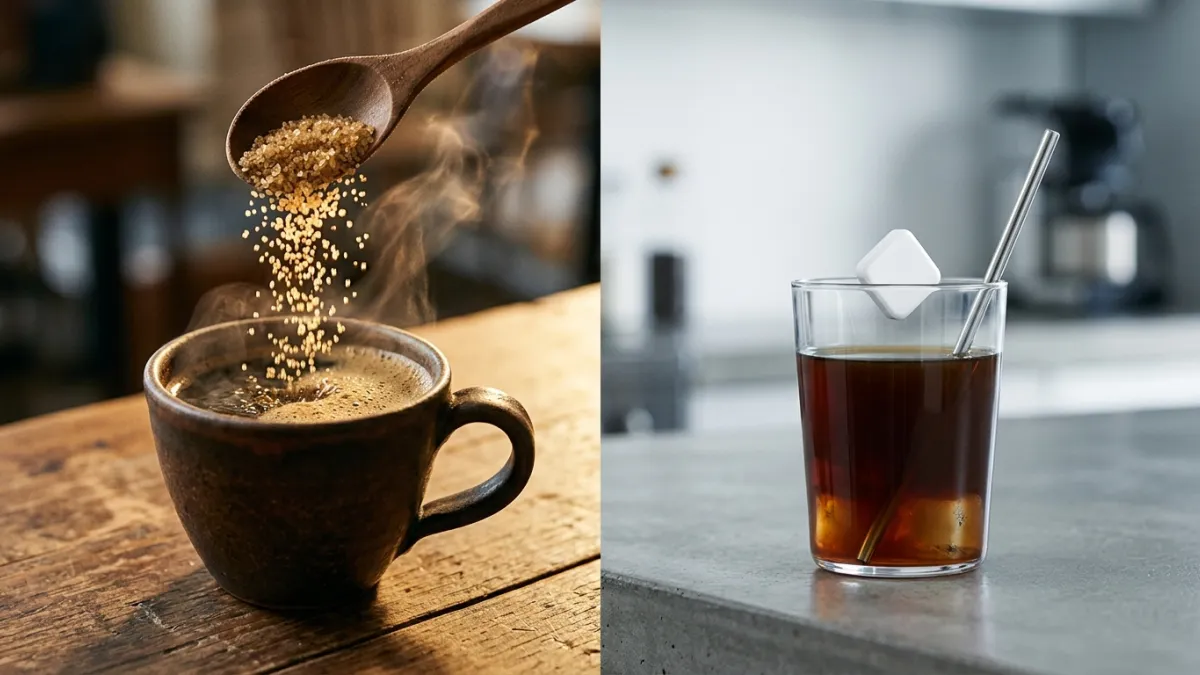
When placing sugar and sweeteners head-to-head for taste in coffee, several key distinctions emerge:
- Mouthfeel: Sugar undeniably adds substance and body, contributing to a richer, more satisfying mouthfeel. Sweeteners generally do not, often leaving the coffee feeling thinner on the palate.
- Aftertaste: Sugar provides a clean finish, allowing the coffee's natural flavors to return. Sweeteners frequently leave a lingering aftertaste that can compete with or overshadow the coffee's inherent profile.
- Flavor Enhancement vs. Alteration: Sugar tends to enhance and complement coffee's existing flavors, bringing out notes of caramel, chocolate, or fruit. Sweeteners, due to their unique chemical structures, can sometimes alter the perceived flavor of the coffee, introducing foreign notes or masking subtle complexities.
- Sweetness Perception: Sugar's sweetness is often perceived as "natural" and integrated. Sweeteners, while delivering intense sweetness, can sometimes be perceived as separate from the coffee itself, creating a less harmonious blend.
Which is "Better" for Taste? The Subjective Truth
After this detailed comparison, the objective answer to "which is better for taste?" remains nuanced: it depends entirely on your personal palate and priorities.
- If your primary goal is to enhance the coffee's intrinsic flavors, add body, and enjoy a clean, harmonious sweetness, traditional sugar is generally the superior choice. Its natural interaction with coffee compounds creates a more integrated and rounded flavor experience.
- If your priority is calorie reduction or managing specific dietary needs, and you are tolerant of or accustomed to the distinct taste profiles and potential aftertastes, then artificial sweeteners offer a viable alternative.
At coffee brew hub, we encourage experimentation. Try different types of sugar with various roasts. Test different artificial sweeteners to see which, if any, aligns best with your taste preferences. Taste your coffee black first to appreciate its natural character before adding any sweetener. Start with small amounts and adjust to your liking.
Conclusion
Ultimately, the "best" choice for sweetening your coffee is the one that brings you the most enjoyment. Sugar offers a classic, integrated sweetness that enhances mouthfeel and complements coffee's natural flavors. Artificial sweeteners provide a calorie-free alternative, though often with a trade-off in mouthfeel and the potential for aftertaste. By understanding these differences, you can consciously choose how to sweeten your brew and truly turn your kitchen into a personal café tailored to your perfect taste.